Case Study
Finding a Simpler Path to Delivery Automation
- Automation
- Deployment
- Logistics
- Workflow
A logistics client wanted to deploy robotic automation inside delivery vehicles to sort and retrieve packages throughout the workday. We helped them identify that the highest-value problem wasn’t moving packages autonomously, but helping drivers find them faster. That shift led to a lower-cost, lower-risk assistive system with a stronger ROI profile.
Challenge
The client’s initial concept introduced major challenges: variable package sizes, shifting loads, tight space constraints, safety requirements, and demanding reliability expectations. The technical path pointed toward advanced robotic manipulation systems that would require considerable investment and operational change, despite limited evidence that full autonomy addressed the highest-value part of the workflow.
Solution
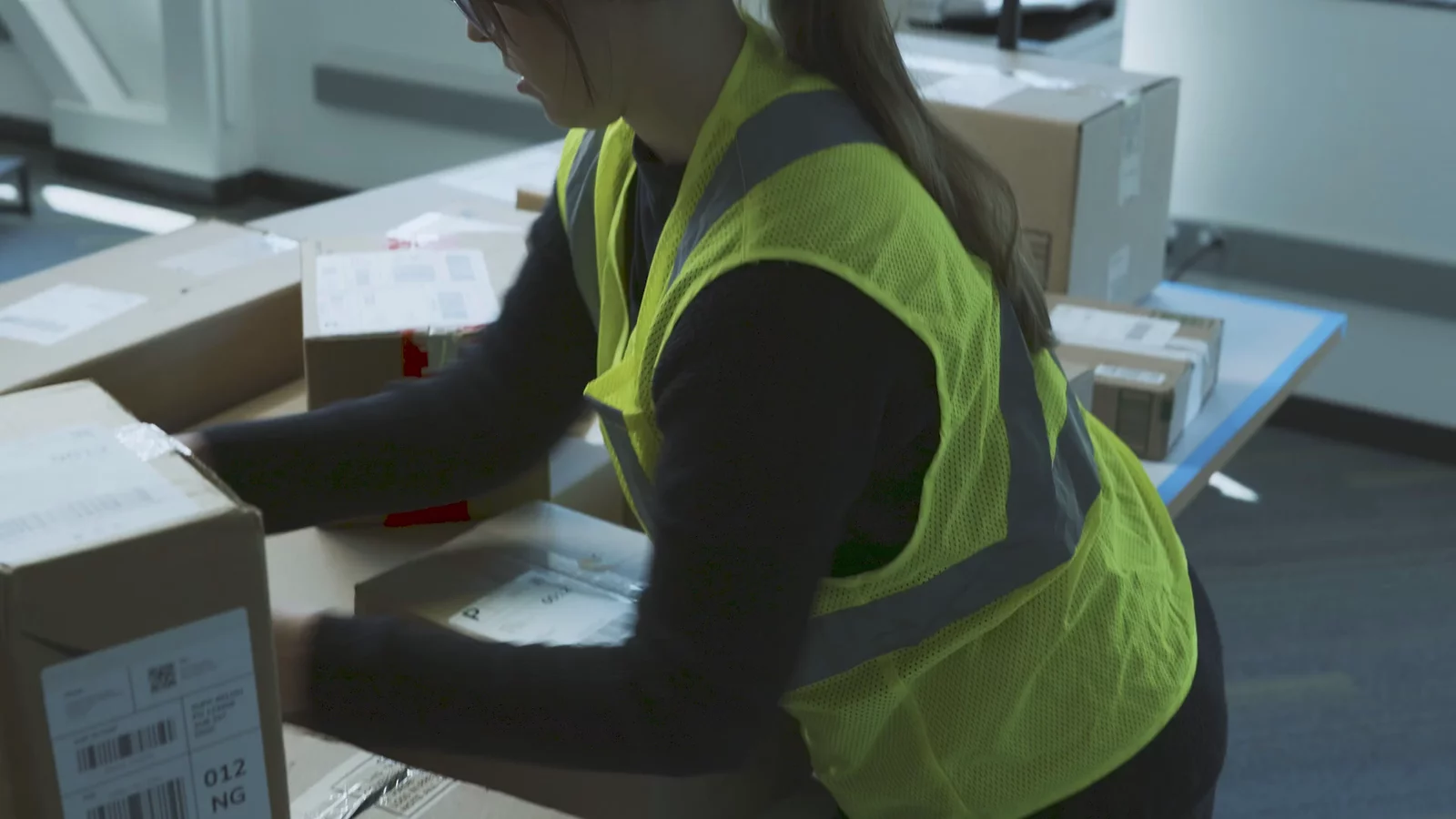
We conducted field research through ride-alongs, workflow observation, and rapid physical prototyping to understand where friction actually existed in the driver experience. That work revealed that drivers were primarily slowed down by locating the correct packages quickly, not physically moving them.
Instead of pursuing full robotic manipulation, we developed an assistive vision system that used scanning, optics, and visual guidance to help drivers identify the right package faster using existing labels and barcodes. By augmenting the driver instead of replacing them, the system dramatically reduced technical complexity while preserving operational value.
Outcome
The resulting product delivered immediate workflow improvements without the cost and risk of full robotic autonomy. The assistive system improved package retrieval speed and accuracy while remaining simple enough to integrate into existing fleet operations. It was piloted across hundreds of vehicles and provided a scalable foundation for future automation efforts.