
Outcomes & Insights
Select work, perspectives, and observations across our projects.
Outcome: Logistics on the Road
Solving System Problems Rather Than Technology
Solving System Problems Rather Than Technology
Summary
A last-mile logistics client set out to build an ambitious robotic system inside delivery vehicles to automate package sorting and retrieval. While technically compelling, the approach carried high cost and risk. Product Insight (PI) reframed the problem by studying real driver workflows and identifying where automation would deliver the most value. Instead of pursuing full robotic autonomy, they developed an assistive vision system that helped drivers locate packages faster, resulting in a lower-cost, lower-risk product with a stronger and more immediate ROI.
Problem
Before Product Insight got involved, the project was centered on a bold but complex idea: deploy robotic automation within delivery vehicles to pick, sort, and manage packages throughout the day. This concept assumed that removing the driver from key parts of the workflow would create the greatest efficiency gains. However, the operating environment posed significant challenges, including variable package sizes, constantly shifting loads, tight spatial constraints, and strict reliability and safety requirements. The technical path pointed toward advanced robotic manipulation, which would require substantial investment, introduce integration challenges, and potentially depend on changes to upstream logistics processes. Despite the ambition, there was limited validation that this level of automation addressed the most valuable part of the problem.
Risk
Moving forward with the original concept would have committed the client to a costly and technically demanding development effort with uncertain returns. Building a fully autonomous robotic system in such a dynamic environment risked reliability issues, long development timelines, and significant safety considerations. It also could have required rethinking how packages were handled upstream, adding further complexity and operational disruption. Most critically, the client risked investing heavily in solving a technically impressive problem without confirming that it delivered meaningful business value. This created the potential for misaligned investment, where cost and complexity outpaced real-world impact.
Solution
Product Insight shifted the approach by treating the original concept as a hypothesis rather than a fixed direction. The team conducted field research through ride-alongs and direct observation of drivers, grounding the work in real operational behavior. The team built rapid, low-fidelity prototypes using simple materials to test assumptions and understand constraints in context. This process revealed that the primary bottleneck was not physically moving packages, but identifying and locating the correct package quickly.
From this insight, the team reframed the solution around augmenting the driver rather than replacing them. They developed a system that used scanning, optics, and visual guidance to identify packages and direct the driver to the correct item. By leveraging existing barcodes and labels, the system avoided the need for complex manipulation while still delivering meaningful efficiency gains. This dramatically simplified the architecture, reduced technical risk, and enabled faster iteration. The solution was also designed as part of a broader system, considering installation, maintenance, fleet operations, and scalability, ensuring it could be deployed and supported in real-world conditions.
Outcome
The result was a deployable product that delivered immediate value while avoiding the cost and risk of full robotic automation. The assistive system improved driver efficiency by reducing search time and increasing accuracy, while remaining simple enough to integrate into existing fleet operations. It was developed into low-volume production units, piloted across hundreds of vehicles, and transitioned to the client for scaling.
By focusing on the highest-value intervention, the client achieved a stronger ROI profile, with lower development costs, faster deployment, and minimal downside risk since drivers could continue their workflow if the system failed. The solution also created a scalable platform that could evolve over time, supporting future automation efforts without requiring a large upfront investment. Ultimately, the engagement demonstrated that the greatest value came not from building the most advanced system, but from identifying the right problem to solve—turning a high-risk robotics moonshot into a practical, ROI-positive product opportunity.
Insight: Iterate on Concepts, Not Hardware
Why We Validate Direction Before Engineering.
Why We Validate Direction Before Engineering.
In the software world, you can launch a half-baked idea, patch it in the wild, and iterate on the fly. Hardware doesn’t work that way. When you commit to physical builds, you’re locking in supply chains, tooling, and lead times that make rapid pivots expensive and slow. That’s exactly why Product Insight deploys concepts long before we touch engineering. We don’t build prototypes to prove a design can be manufactured; we
Testing concepts early isn’t about delaying deployment; it’s about accelerating confidence. We validate direction by generating high-quality data at every phase, mapping out alternate paths that can deliver the majority of the value faster, and designing a phased rollout strategy where each stage creates tangible impact. Instead of betting everything on a single, high-stakes launch, we structure deployments so that early stages prove viability, surface operational insights, and generate the real-world data needed to confidently fund and deploy the next, more ambitious phase. If the evidence shows the concept holds up operationally, financially, and technically, we lock in the architecture and scale. If the data points elsewhere, we pivot quickly without the drag of sunk hardware costs. This approach turns early deployments into stepping stones, not make-or-break gambles, ensuring every phase delivers measurable value to the user and the organization while de-risking the long-term hardware roadmap.
Moving fast in hardware development isn’t about cutting corners; it’s about cutting through uncertainty. By front-loading concept validation, we enable a true agile learning methodology for physical systems, where rapid, low-risk iterations replace the traditional cycle of dragging heavy, designed hardware through slow, costly feedback loops. Execution teams aren’t stuck retrofitting flawed architectures; they’re handed clear, evidence-backed directions that tell them exactly what to build and why. This is how Product Insight helps teams learn early, move fast with clarity, and build what actually works.
Outcome: Automating the “Un-Automatable" Consumable
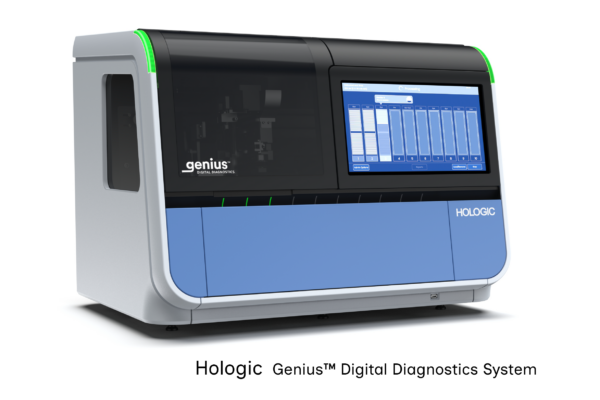
Enabling a medical diagnostics system to keep using legacy slide racks never designed for automation.
Enabling a medical diagnostics system to keep using legacy slide racks never designed for automation.
Summary
A medical diagnostics company developing a high-throughput automation system faced a fundamental challenge: their workflow depended on legacy slide racks designed for manual use, not robotics. Rather than replacing these consumables with a complex automation-friendly system, Product Insight (PI) enabled the automation to work with the existing racks by redesigning how the system interacted with them. This approach preserved the installed workflow, reduced complexity, and delivered a more efficient and user-friendly automation solution.
Problem
Before Product Insight got involved, the core issue was that the existing slide racks were never designed for automation. They relied on human adaptability—technicians could adjust the glass slides by feel, compensate for loose tolerances, and recover from small inconsistencies. A robotic system, however, required precise, repeatable positioning to reliably pick and place fragile glass slides without causing damage or errors. The conventional engineering approach was to bypass the problem entirely by transferring slides from these legacy racks into a new, tightly controlled automation carrier. While technically viable, this would have introduced additional equipment, increased process time, added labor, and created friction for users by disrupting an established lab workflow.
Risk
If the team had pursued the conventional solution, they would have added unnecessary complexity to both the system and the user experience. Introducing a new consumable and transfer step would have increased validation requirements, operational costs, and opportunities for failure. It also risked alienating users by forcing them to abandon a familiar and trusted workflow. At the same time, attempting to automate directly from the legacy racks without rethinking the system could have resulted in unreliable robotic performance, including misaligned picks, broken slides, or failed placements. There was also a broader risk of designing a technically sophisticated system that solved the robot’s problem while making the overall product less efficient and less usable.
Solution
Product Insight reframed the challenge by shifting focus from forcing precision into the consumable to creating predictability at the moment of interaction. Instead of redesigning the racks or adding a transfer mechanism, the team redesigned the system around them. By placing the racks at a slight angle, gravity naturally biased each slide into a consistent and repeatable position when the drawer was closed. This simple but powerful intervention created a reliable datum without changing the consumable itself. As a result, the automation system could use a straightforward gantry and gripper to handle slides accurately.
Beyond the core handling problem, PI extended this thinking to the broader user workflow. The team identified potential failure modes, such as incorrect rack orientation, and addressed them with a low-cost mechanical safeguards that physically prevented improper insertion. They also designed the system to accommodate real lab conditions, including the need to add urgent samples during operation. By using a drawer-based architecture, users could insert new slides without interrupting the entire process, making the system more flexible and aligned with real-world use. Across all decisions, the focus remained on integrating robotics, human workflow, and existing infrastructure into a cohesive system.
Outcome
The final system successfully automated a process that initially appeared incompatible with robotics, without requiring new consumables or added transfer steps. This preserved the customer’s existing workflow while reducing system complexity, cost, and validation burden. Reliability improved because the system created predictable conditions for robotic handling rather than relying on unrealistic precision from legacy components. User experience was enhanced through built-in safeguards and flexible operation, reducing the likelihood of errors and accommodating real lab demands. Ultimately, the value of the engagement came from making the overall system smarter rather than more complex—demonstrating that effective automation often depends less on adding precision and more on applying Product Insight to the full workflow.
Insight: Learn Why Automation Initiatives Fail
Stop Betting on Assumptions: The Evidence-First Path to Automation
Stop Betting on Assumptions: The Evidence-First Path to Automation
Traditional automation initiatives fail because they’re built on a fundamental delusion: the belief that you can define every requirement upfront and simply march backward to a launch date. Most teams fall into the trap of a “work backwards” schedule, treating development like a checklist where builds are just bureaucratic hurdles rather than learning opportunities. They assume the process is static, isolate individual components, and try to “drop in” automation as if it’s a plug-and-play software update. But physical business processes are messy. They’re shaped by human variability, environmental constraints, and hidden dependencies that only reveal themselves when you actually run them. When you skip that discovery phase and commit capital to rigid hardware too early, you bake compromises into the architecture. You end up with a system that looks perfect on paper but collapses in the field, leaving you with sunk costs, missed ROI, and a team spinning its wheels trying to fix an unfixable foundation.
At Product Insight, we flip that dynamic entirely by optimizing for real-world outcomes, not just milestones or procurement targets. We don’t start with a finalized spec sheet; we start with a systems-level map of the actual workflow, the people who operate it, and the constraints that govern it. Instead of building expensive, polished hardware to chase a backward schedule, we iterate on concepts. We deploy low-fidelity, disposable prototypes designed specifically to interrogate assumptions. In the most basic version, your warehouse floor robots are just a handful of people, “human-bots,” in blue hats following a strict set of rules. This lets you iterate capabilities rapidly and in wildly different directions—robotic arms become overhead cameras, AI data crawlers become conveyors with traditional sensors, and dynamic digital indicators are just post-it notes. That’s how we adapt the agility of software development to the realities of physical systems, front-loading the heavy lifting of discovery and data collection before a single dollar is committed to permanent hardware.
This isn’t just a different methodology; it’s a fundamentally different philosophy built on two principles: think in systems, build with evidence. Traditional automation optimizes for the cheapest part or the fastest timeline, which almost always means sacrificing long-term reliability and user adoption. We optimize for viability and the result isn’t just a functional machine—it’s a validated direction that holds up in the real world. Because when you anchor your strategy in evidence rather than assumptions you don’t just automate a task—you transform how your business operates.